Introduction
Some time ago, I worked with a scientific group that was applying their research findings to a potential real-world product. My role was to build a prototype of a wearable device: a pair of glasses using an electro-optical shutter instead of regular lenses.
The concept was to combine the glasses with another device that modulated the incoming light. The shutter technology had already been proven at an experimental bench setup, but the task here was different. The group needed something that looked and felt like an actual product, something they could show to investors and partners as a first step toward commercialization.
Design and modeling
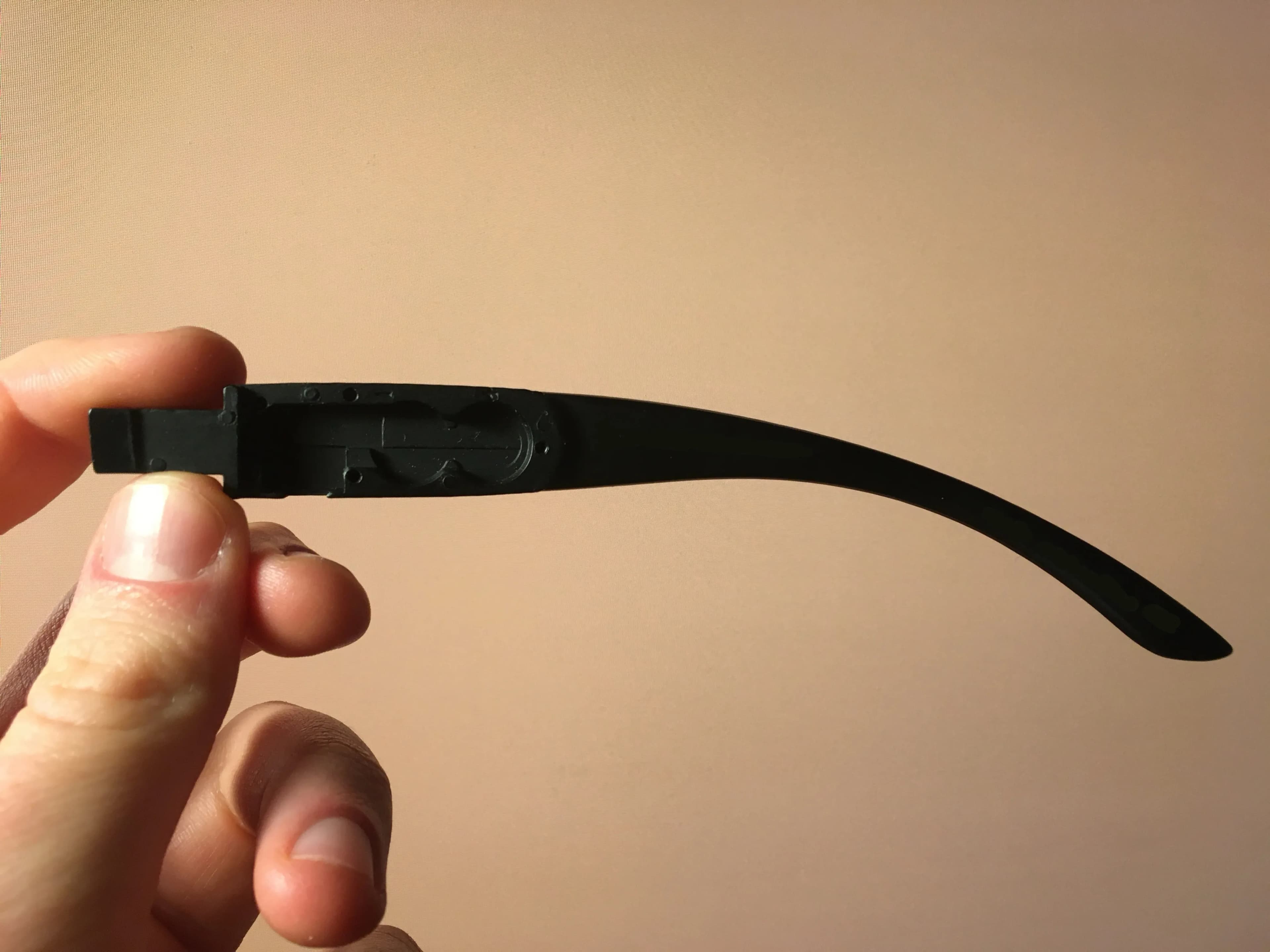
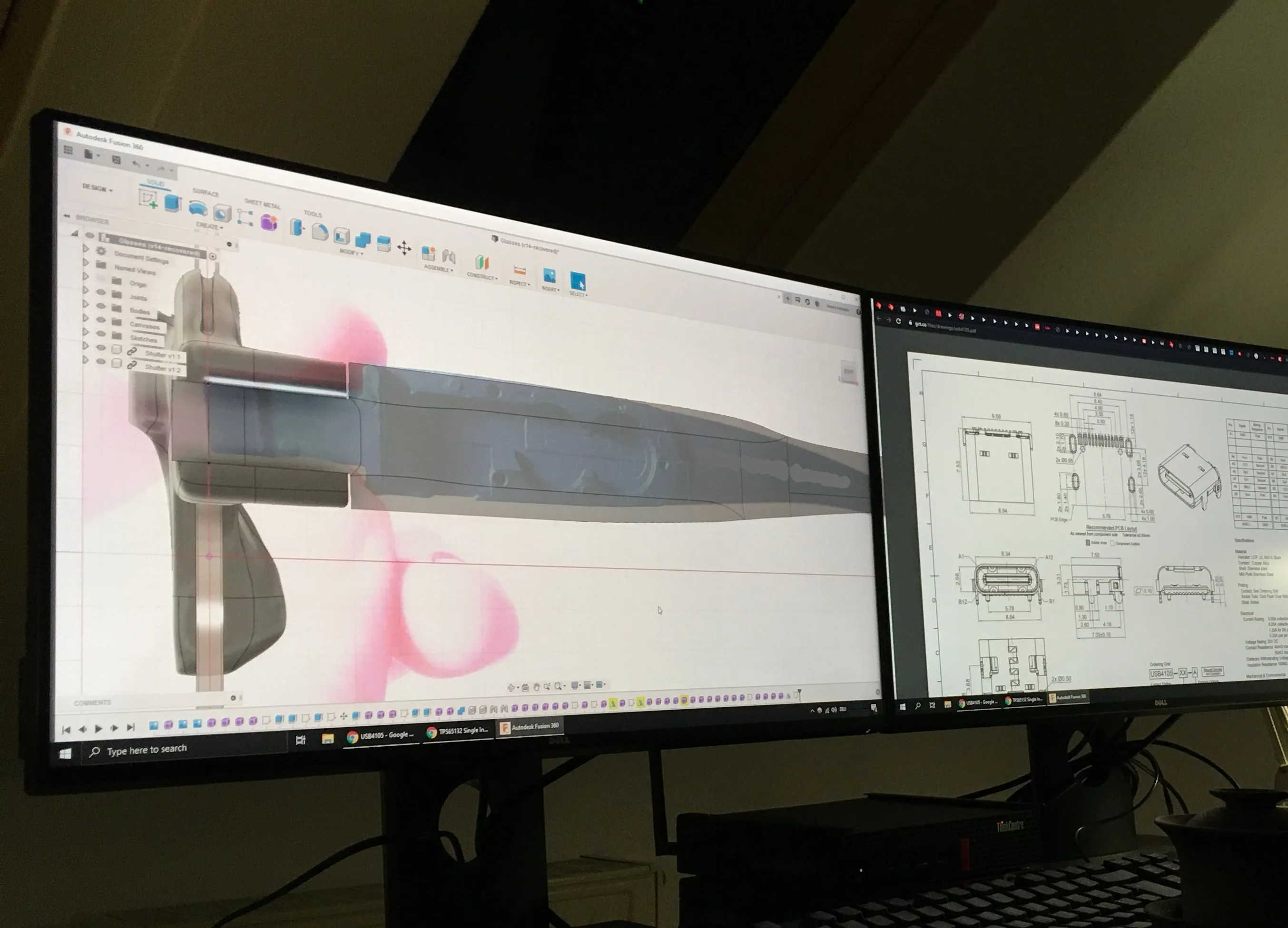
Since modeling glasses from scratch is quite complex, I started with a practical shortcut. I bought a cheap pair of plastic reading glasses from a supermarket and used them as a reference. The glasses were disassembled, photographed, and the geometry was recreated in CAD.
Frame production and integration
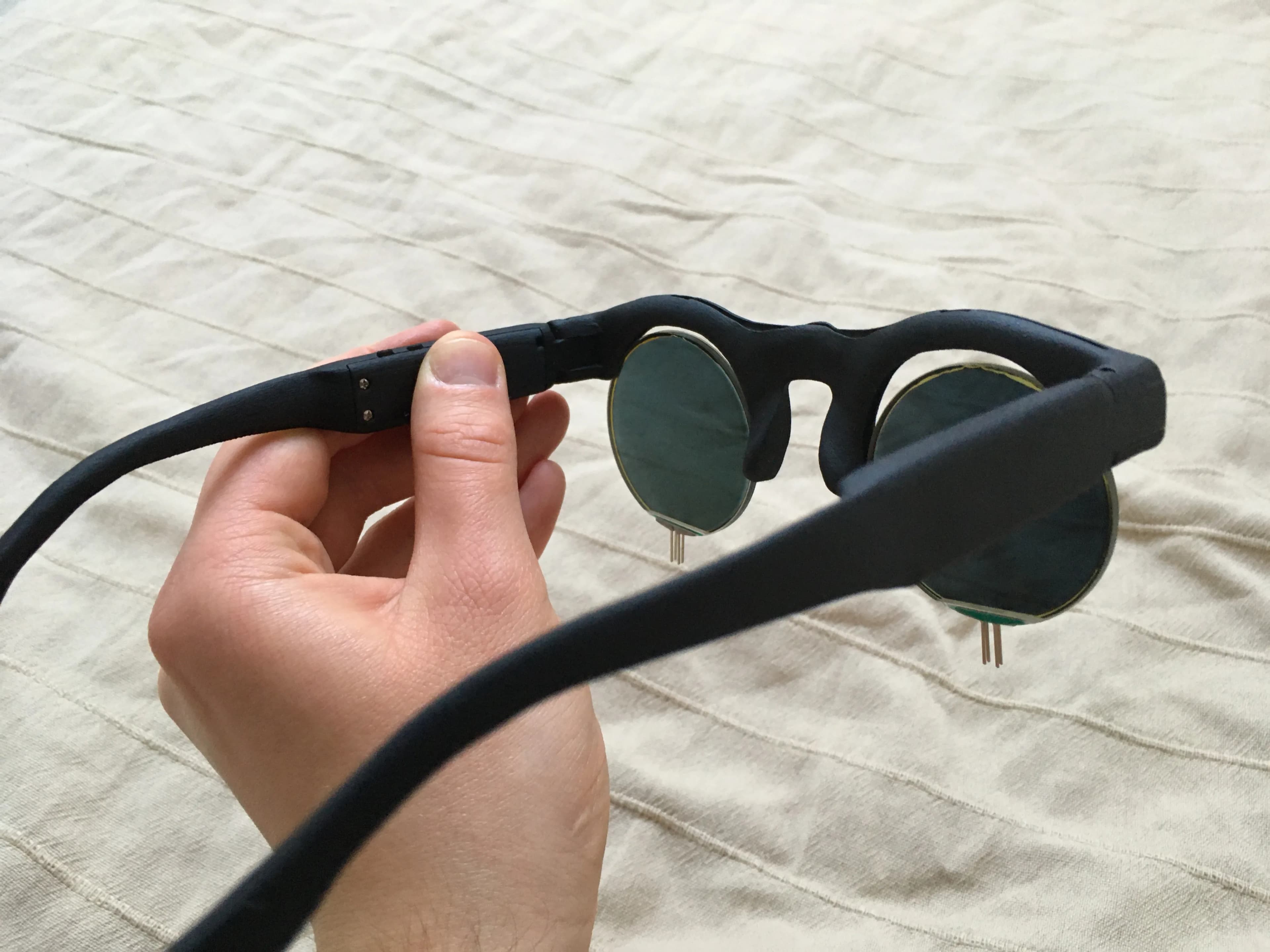
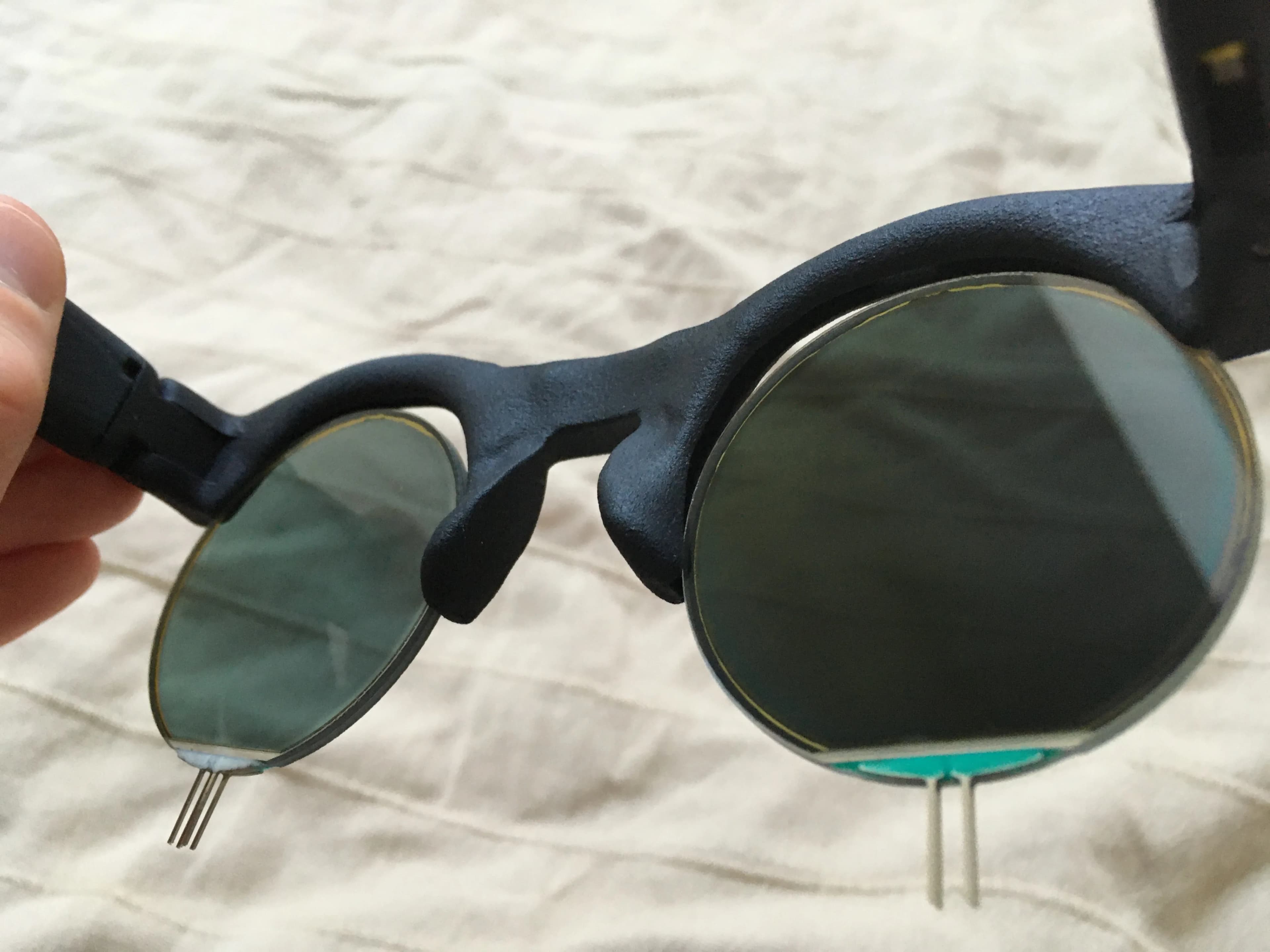
Because of the intricate shapes, I decided to outsource the frame production. The result was an SLS 3D print with black paint finish. As expected, the electro-optical shutters did not fit straight out of the box, so the print required careful adjustments before integration.
Electronics design
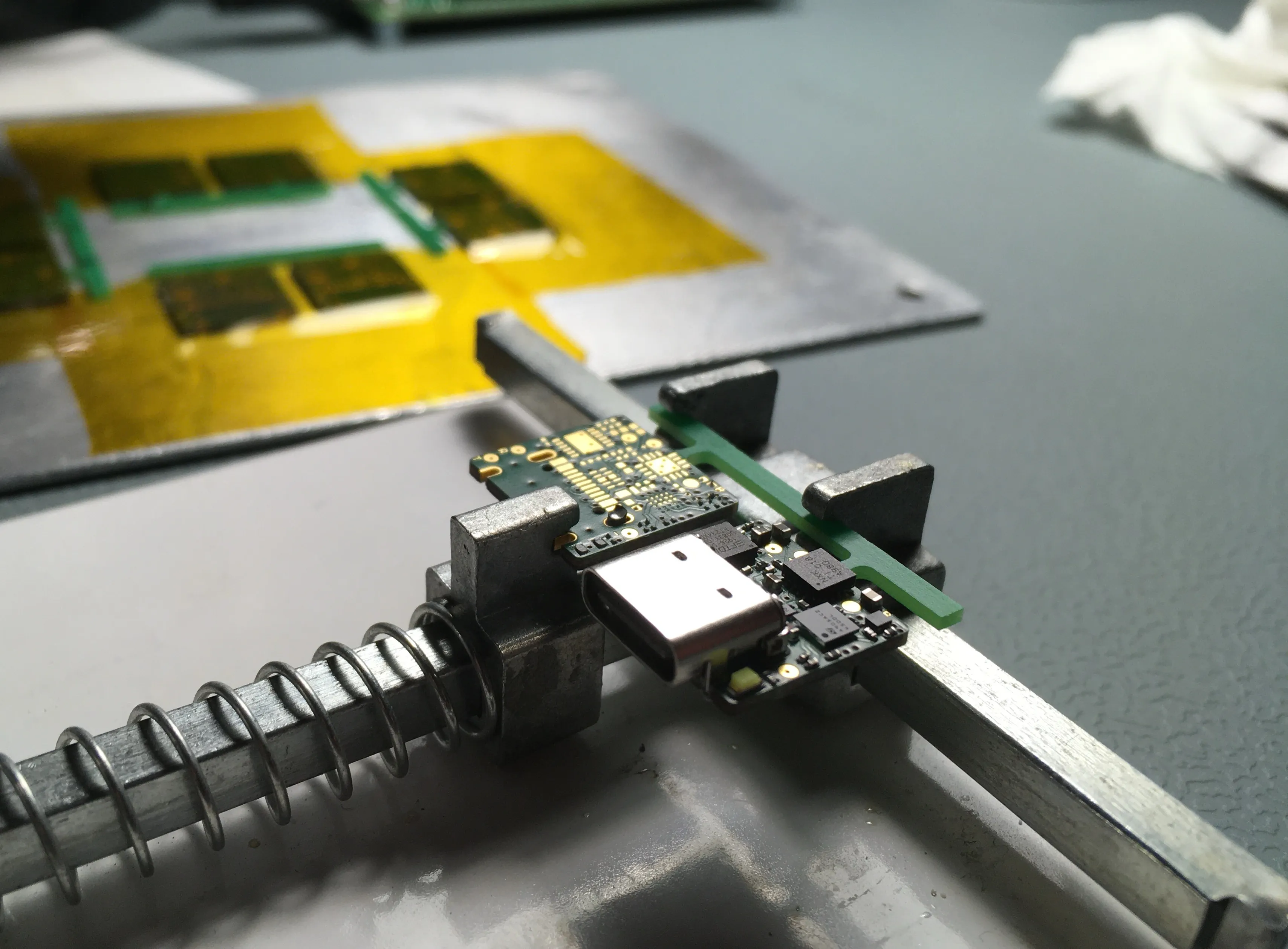
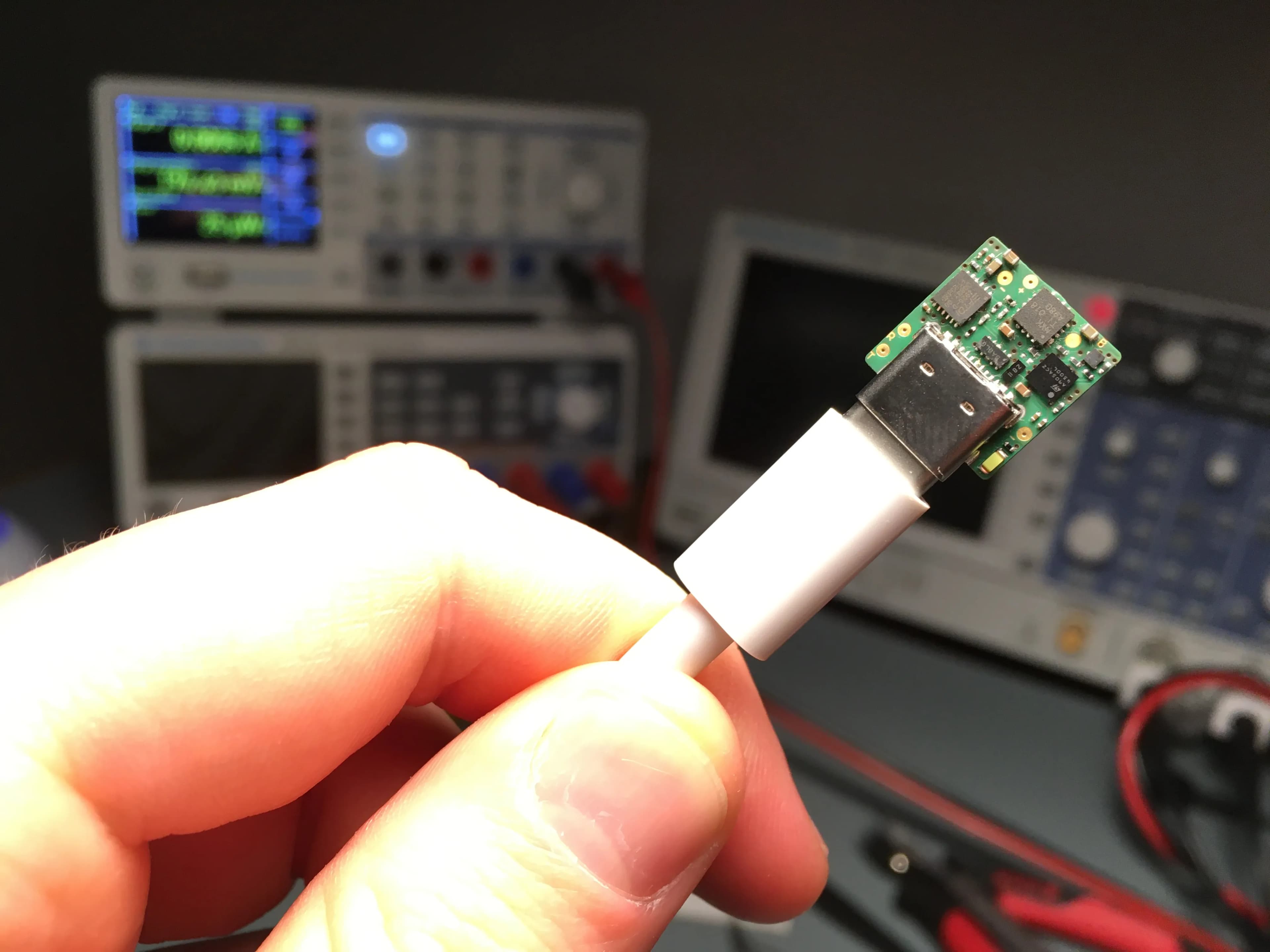
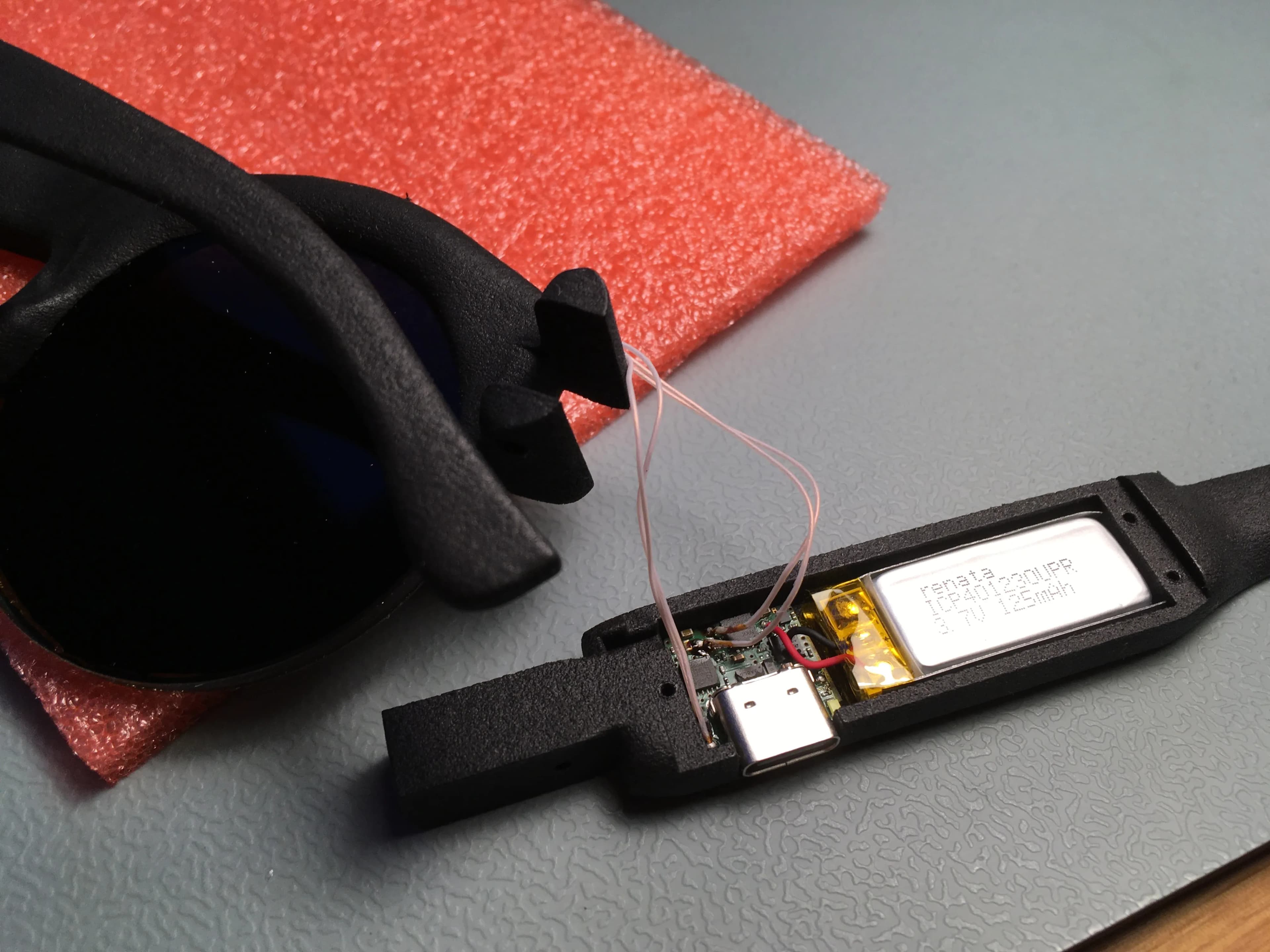
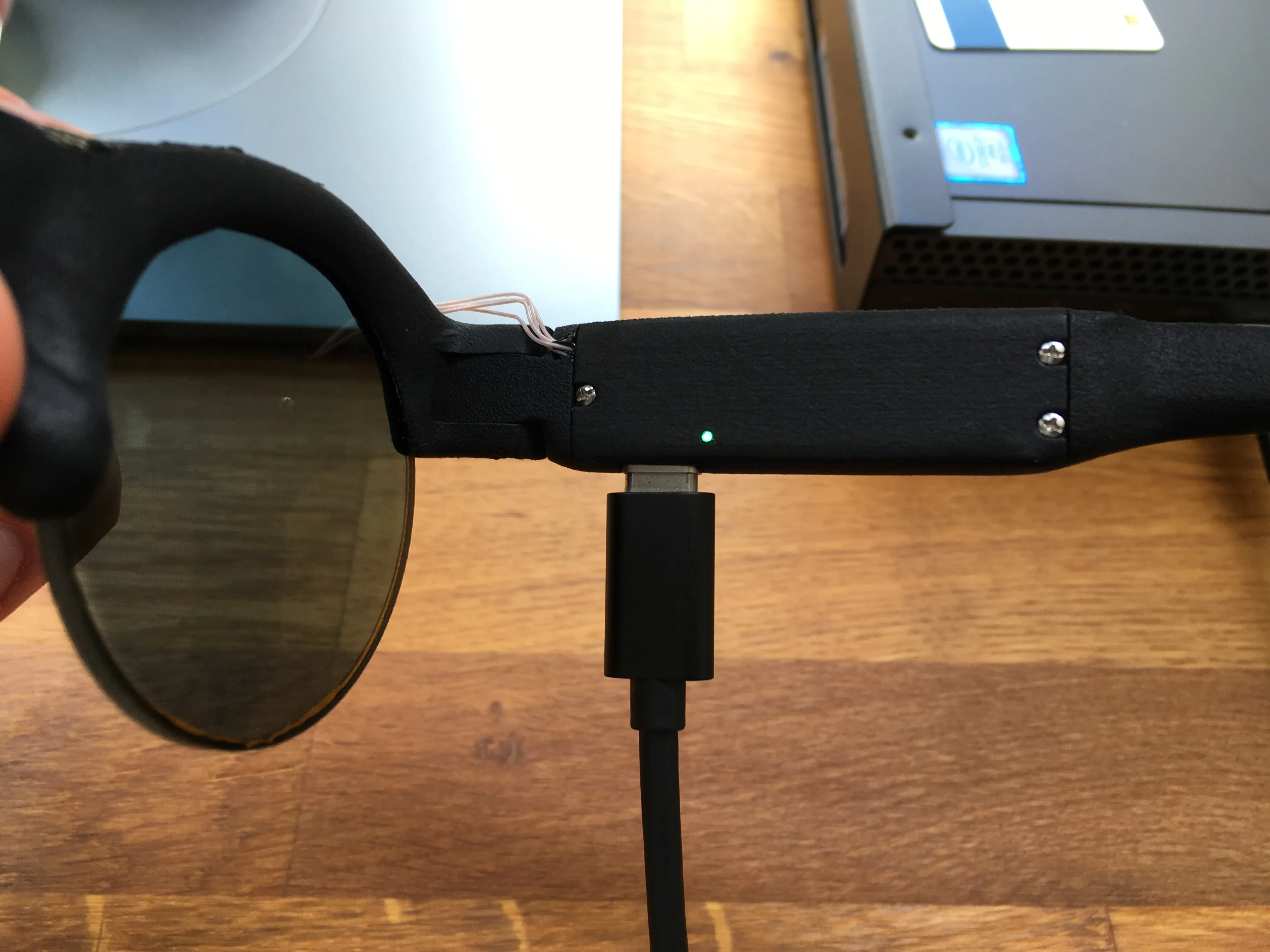
To make the prototype self-contained, I designed a small custom PCB with all required electronics. It included battery power, USB-C for charging, and a built-in microcontroller that could be reflashed if needed. This made the device fully portable and independent from lab equipment.
Assembly and testing
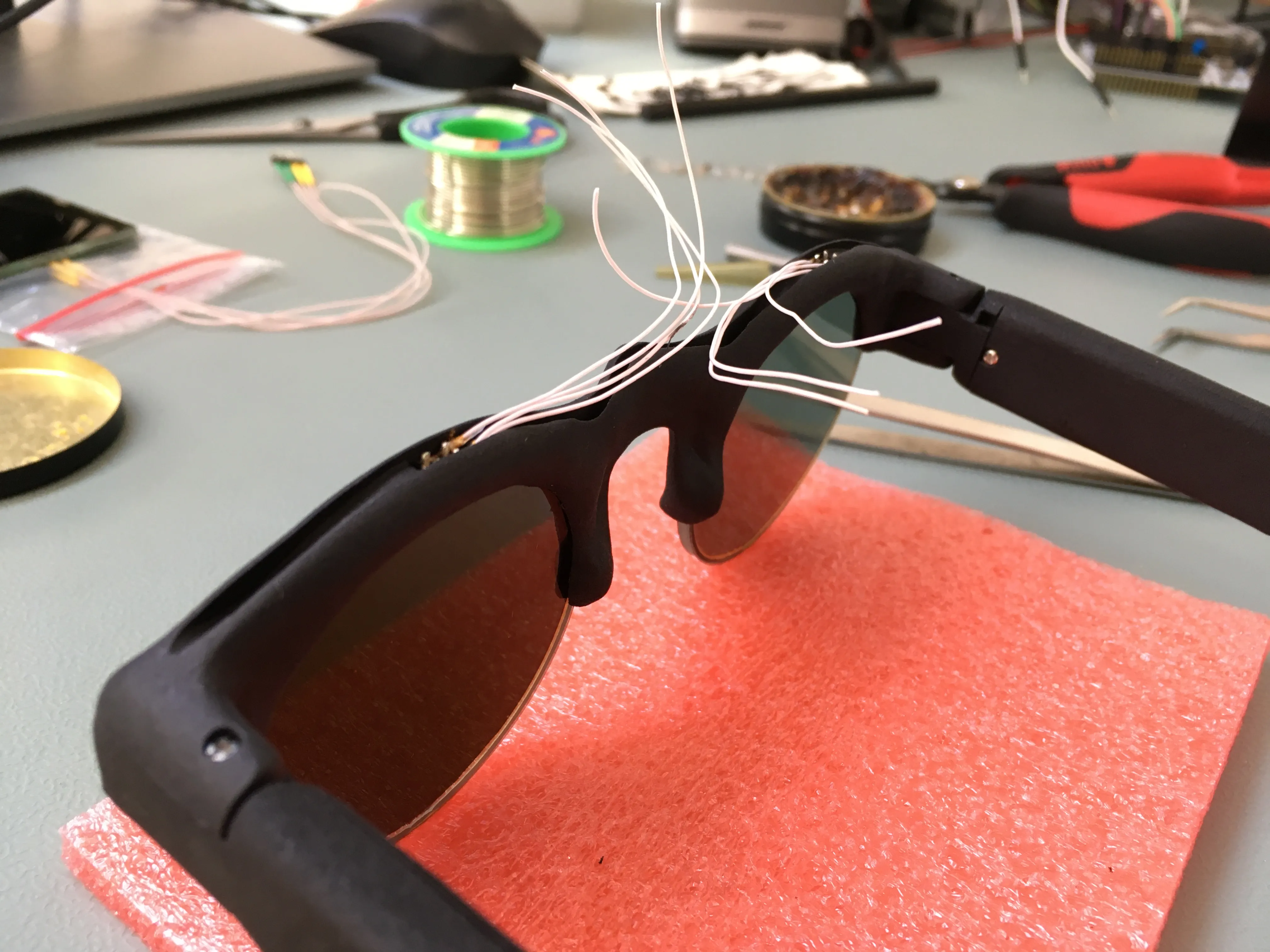
Once the shutters were installed, the wiring was routed through the upper part of the frame and concealed with black hot glue. It was not the cleanest solution, but for a first prototype the priority was proof of integration, not cosmetic perfection. After this mechanical integration, which was stressful for the fragile shutters, I tested their functionality again. The shutters still operated correctly, and charging and communication over USB worked as intended.
Final result
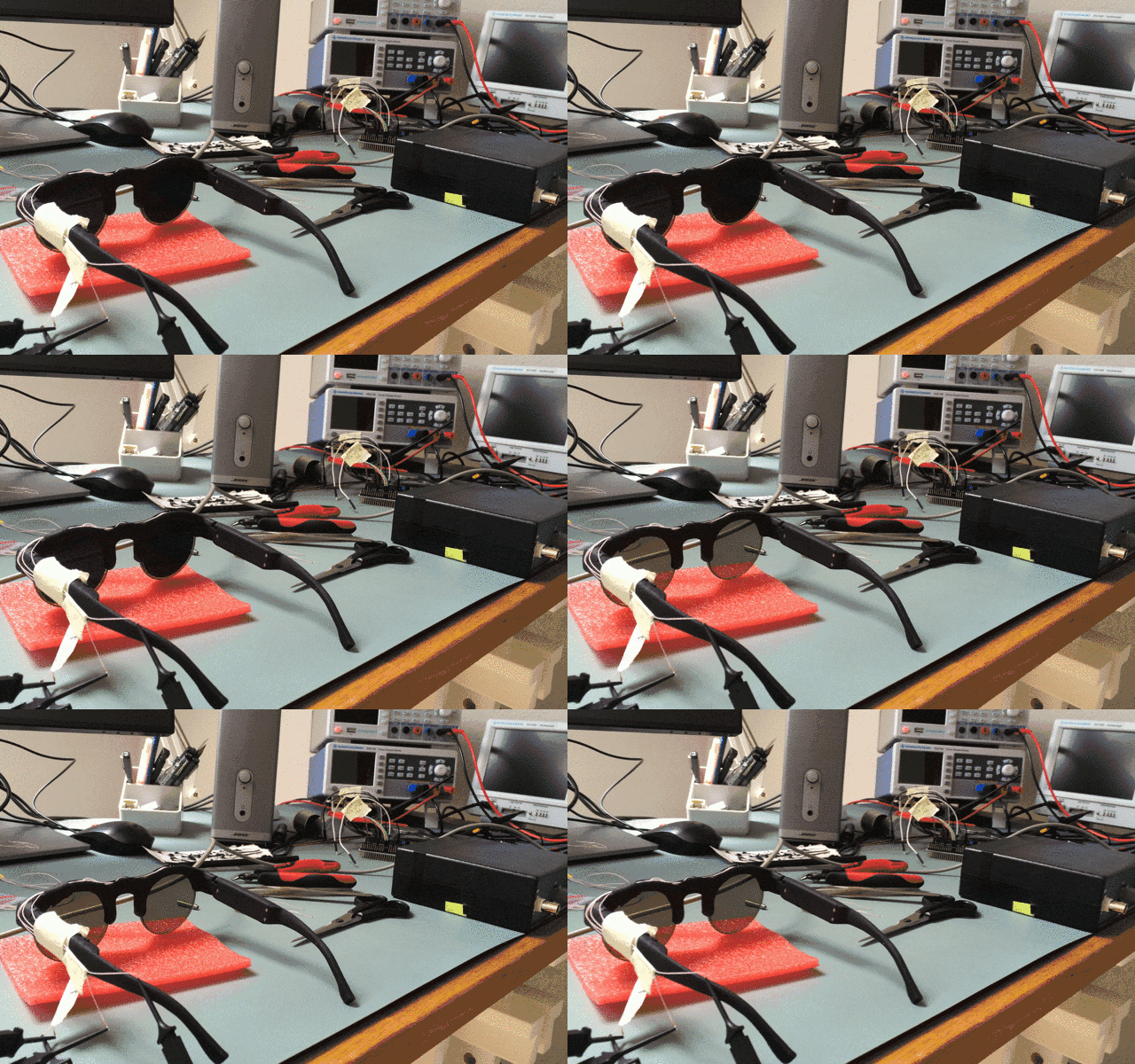
This was the only video I was able to retrieve from the project, but it demonstrated the concept clearly: an autonomous wearable device that combined electro-optical modulation with a familiar glasses form factor.

Conclusion
As with many short research contracts, I did not follow up on whether the prototype advanced to further fundraising or development. But it was another valuable experience, this time working on a wearable, integrating optics, mechanics, and embedded electronics into a compact and functional device.