Introduction
When it became clear that driving a piezo disc with a tiny op amp wasn't enough, the next step was obvious: a more capable driver was needed. Piezo actuators demand significant charge for rapid ceramic expansion, and this post is about the attempt to build exactly that.
Design overview
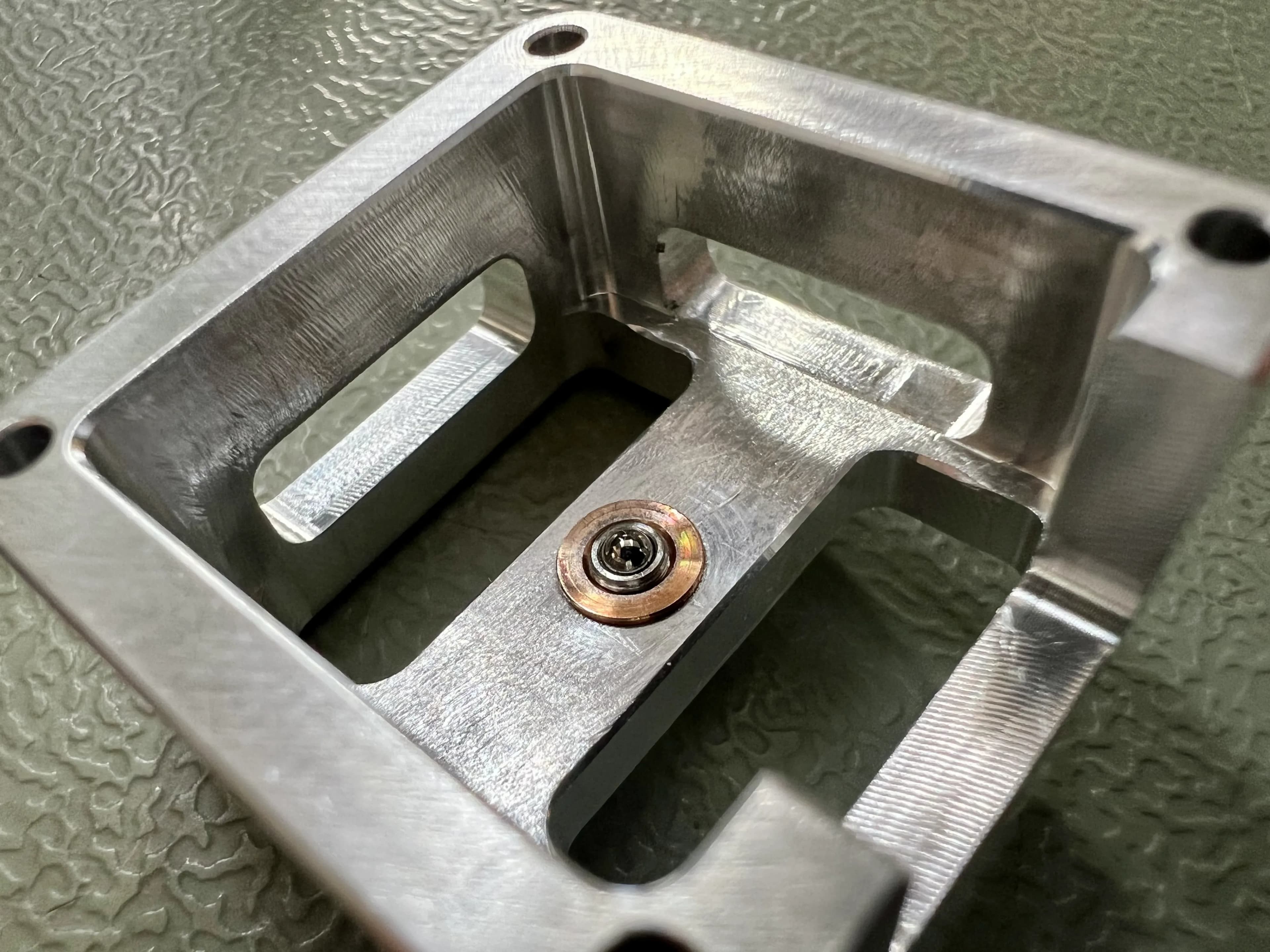
The design started with a tiny heater PCB that carried both a pressure sensor and a temperature sensor for the solder paste chamber. This chamber was built into the aluminium housing from the earlier experiments. Alongside it came a second board, built around an STM32 microcontroller and the Boreas BOS1211 piezo driver. On paper, the BOS1211 looked like a perfect fit. It can provide up to 120 V output, generate the required waveforms over SPI, and drive capacitive loads up to 4 µF, more than enough for the actuator in use.
Mechanical design
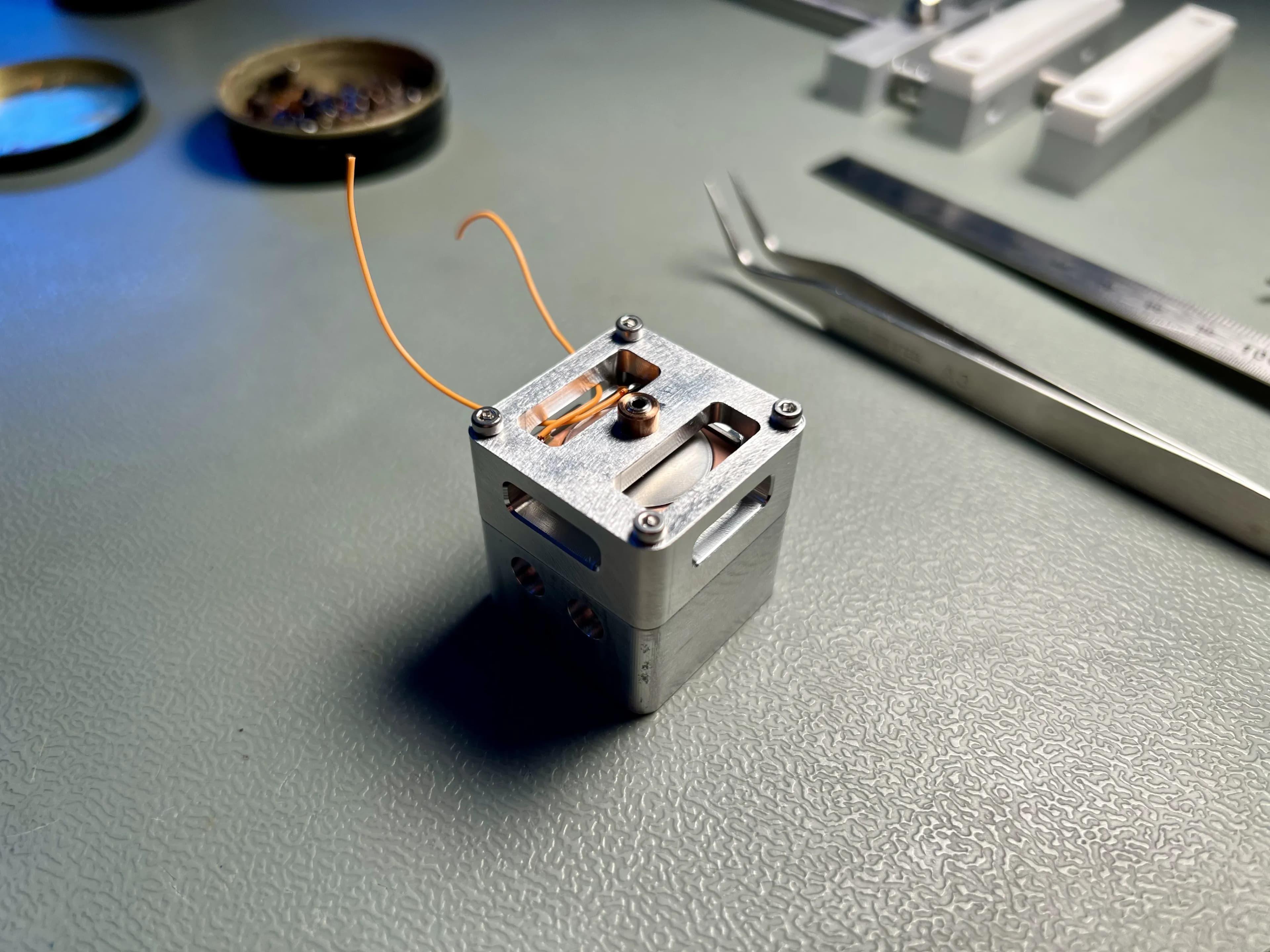
To revisit the concept: at the core is a regular 3D printer nozzle with a 100 µm opening. The nozzle thread was shortened to fit into the lower assembly, which doubles as a heater board. This same board holds the sensors to monitor chamber pressure and temperature. A steel pin with a rounded end acts as the piston. Its position is precisely adjusted using a Thorlabs 200 µm/rotation set screw, ensuring the piezo actuator only travels the exact gap between its relaxed state and the nozzle's inner cone. The rapid movement generates the required pressure spike to jet solder paste. Designing the seal and gliding mechanism for the pin took some trial and error, but high-precision bushings paired with dowel pins worked well.
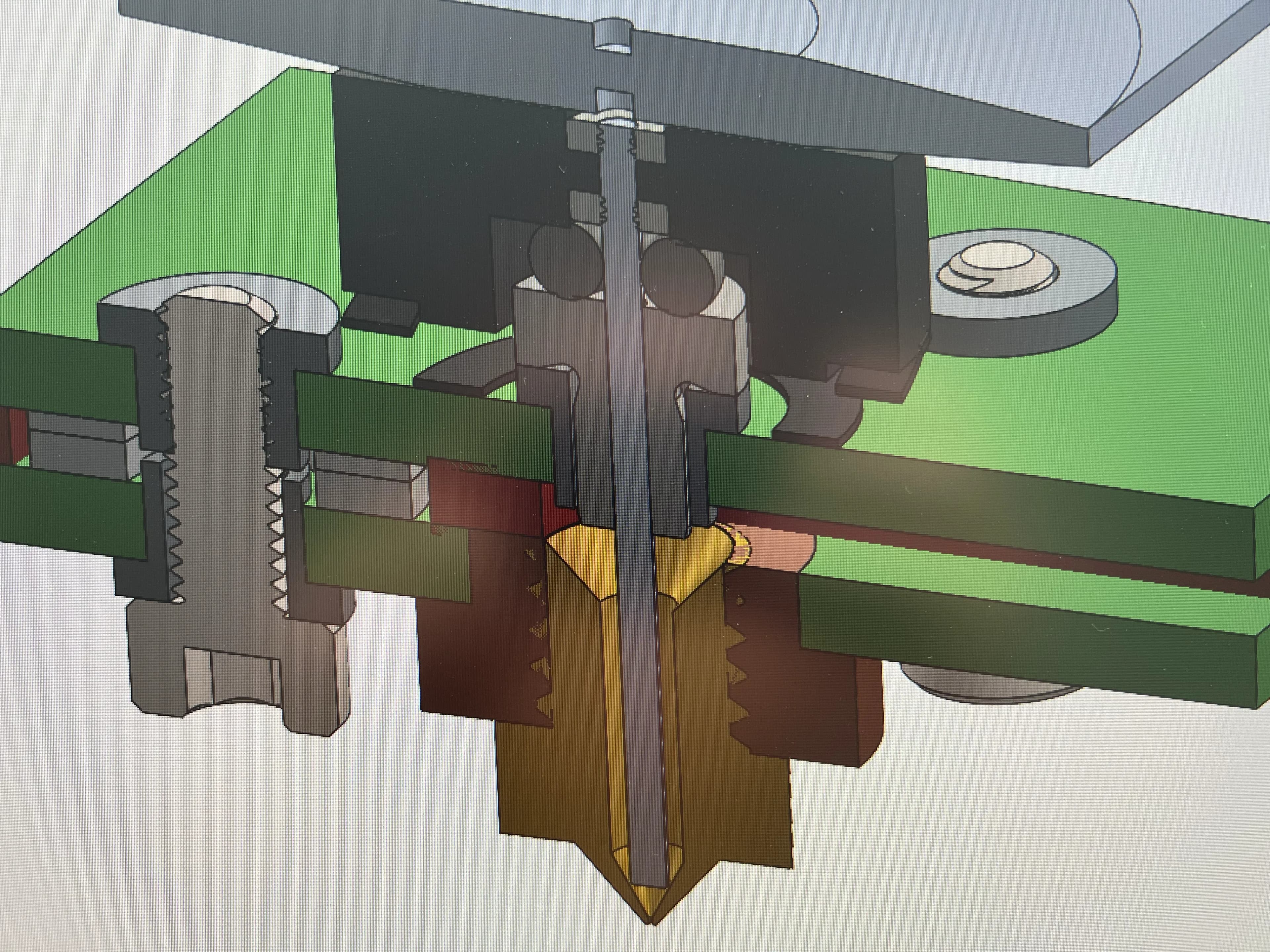
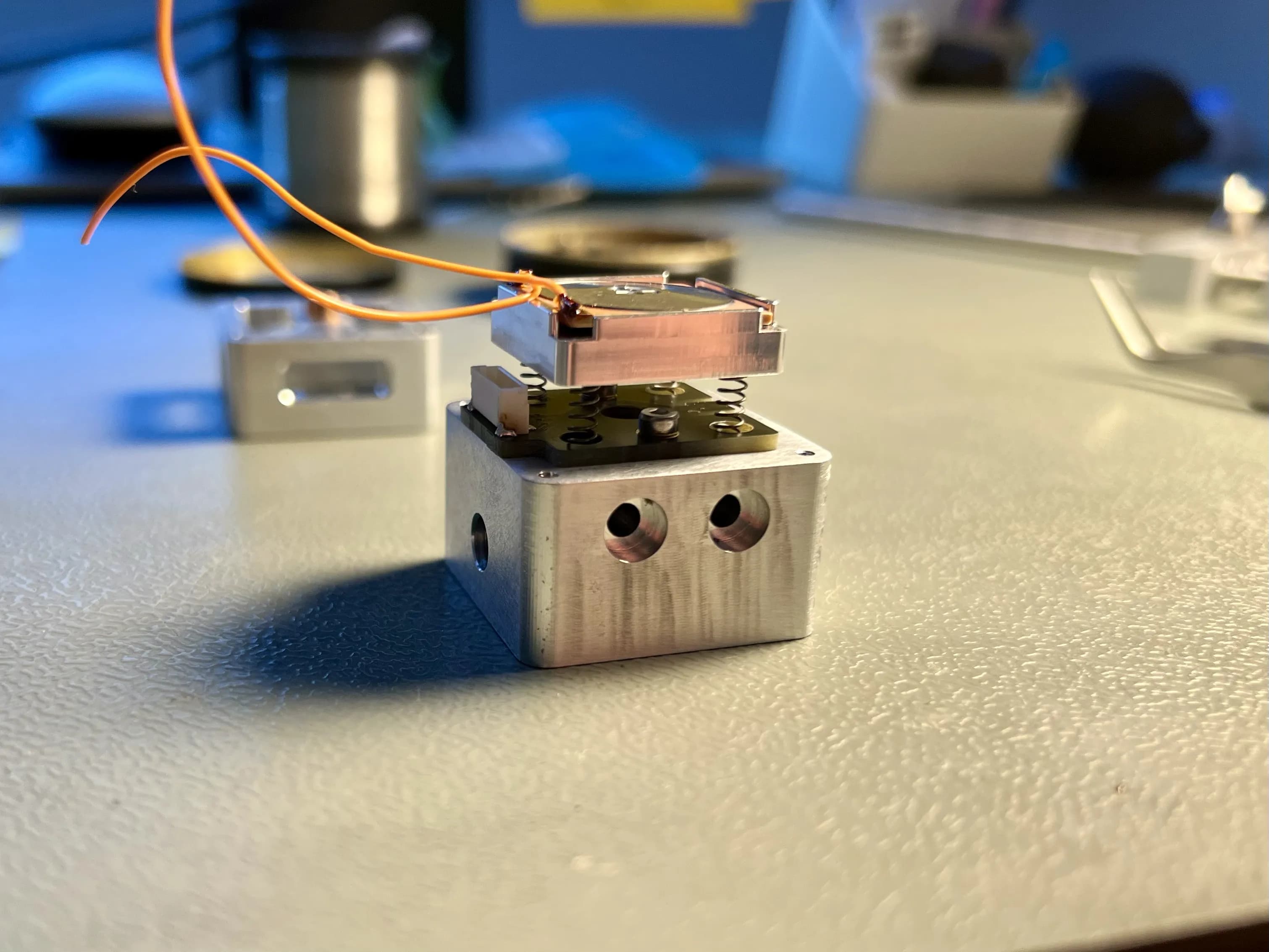
The piezo actuator itself sits in a spring-loaded carriage with four return springs. These reset the piston to its initial position after each jet, allowing paste to flow back into the nozzle cone. The lower heater board, with connectors for the sensors, is clearly visible in this view.
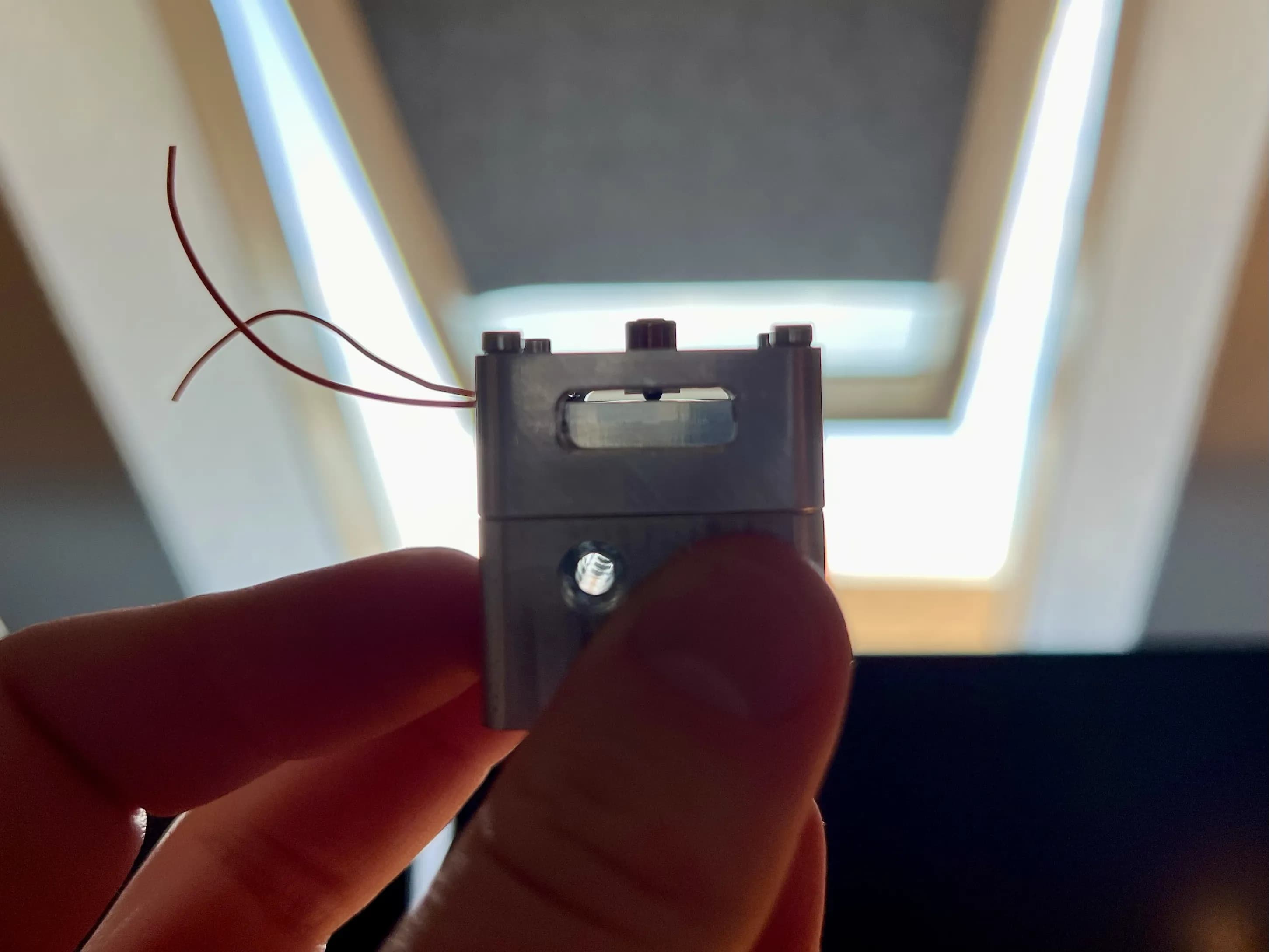
Once the upper set screw was added, the gap between the carrier and the pin could be finely tuned. The two wires visible on the side belong to the piezo actuator.
Testing and validation
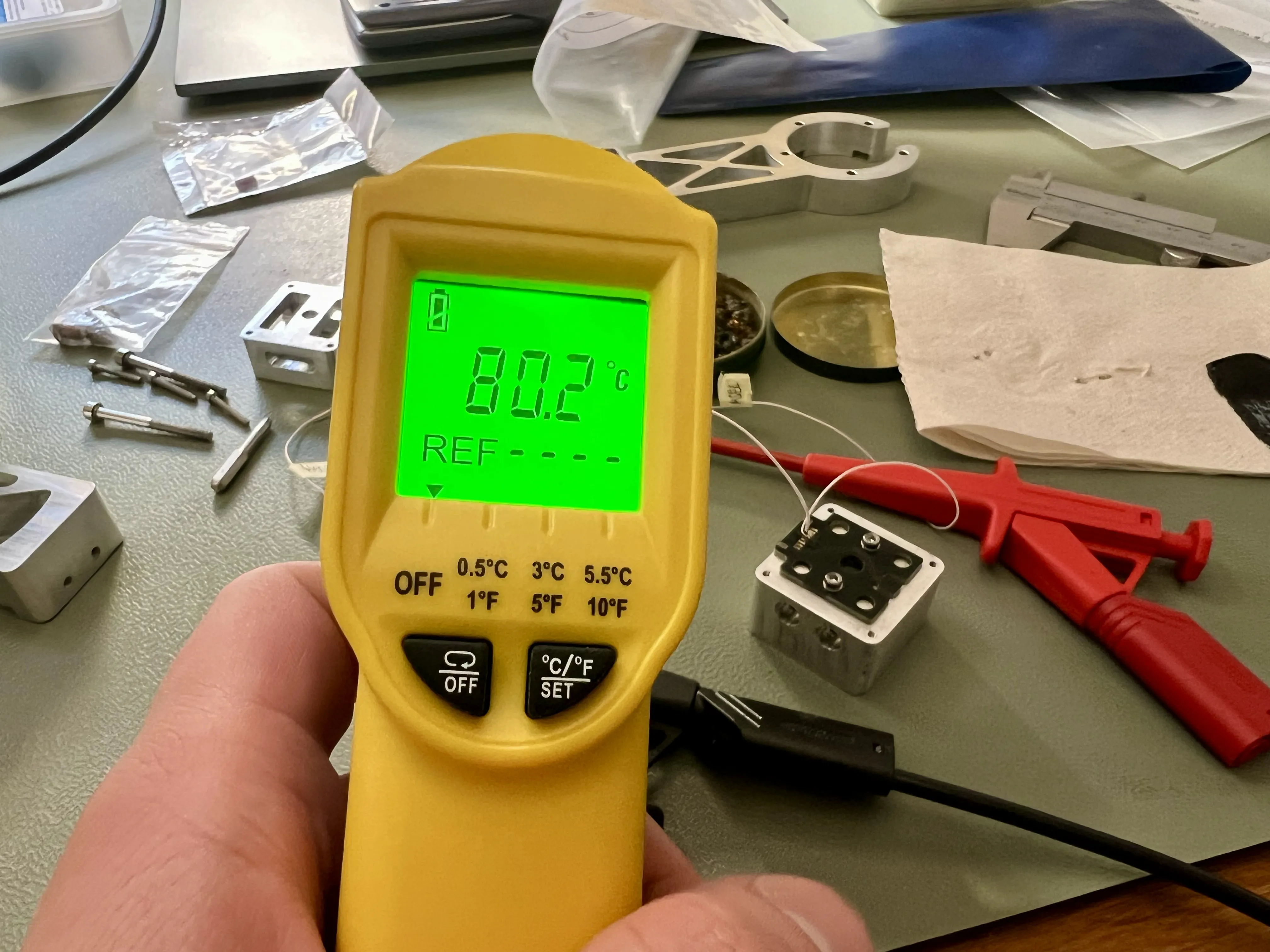
The heater board was then tested with the aluminium enclosure block. Designed for a safe operating limit of 75 °C, it reached 80.2 °C in testing. The reading was taken on the black PCB surface, not aluminium, so some IR measurement error is expected.
Debugging challenges
The next step was bringing up the driver. The assembled board was connected to an ST-Link debugger.
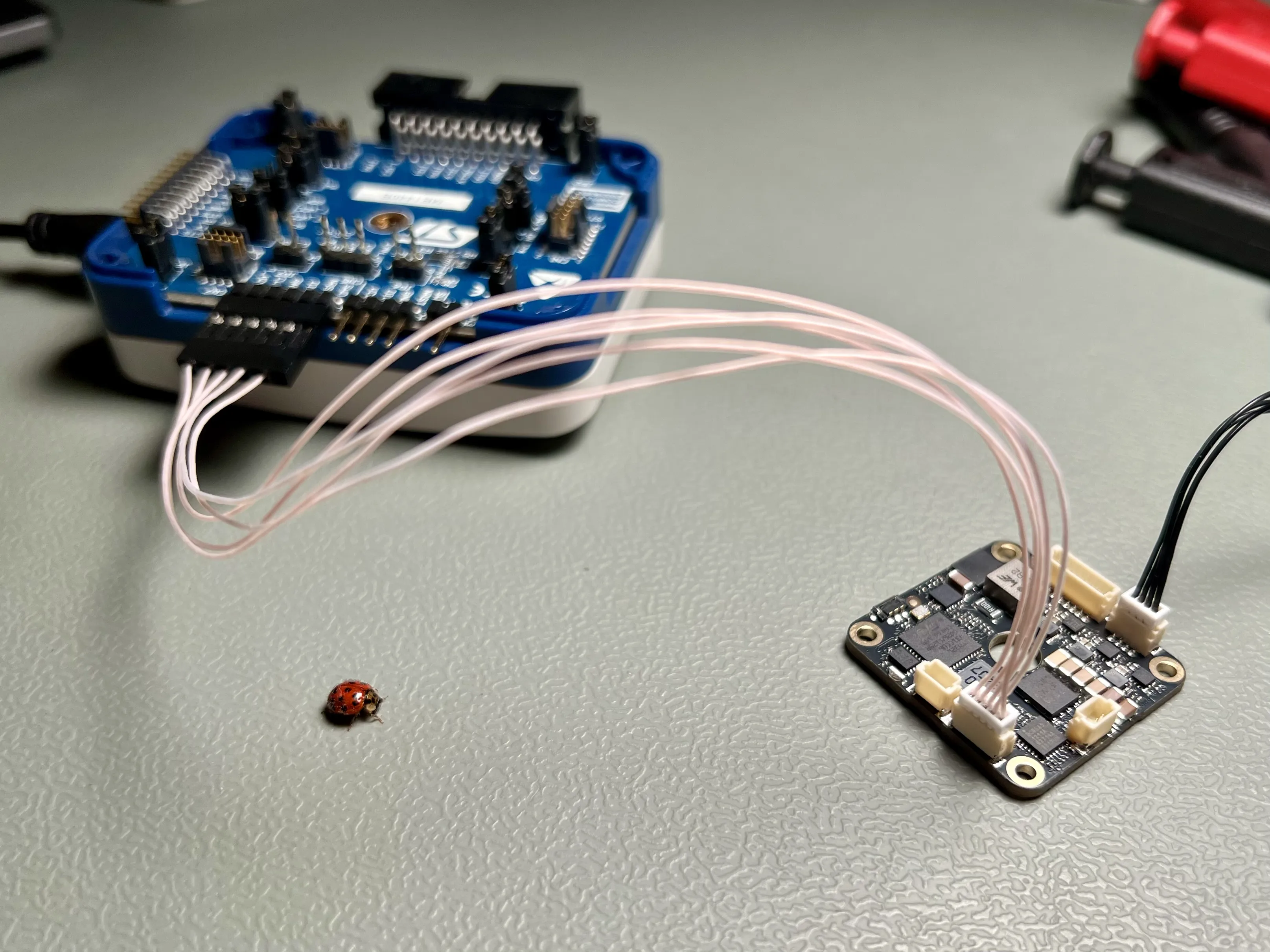
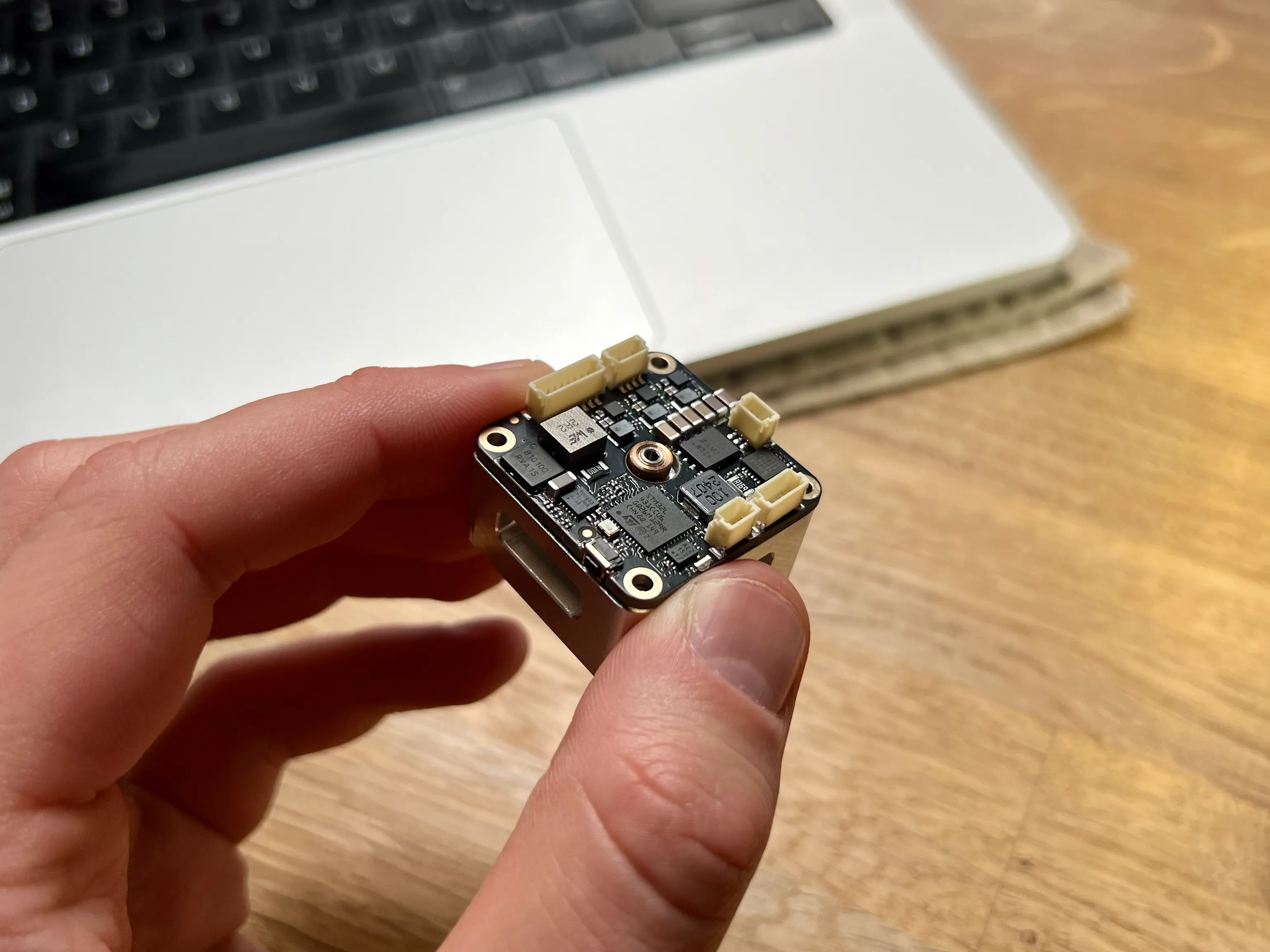
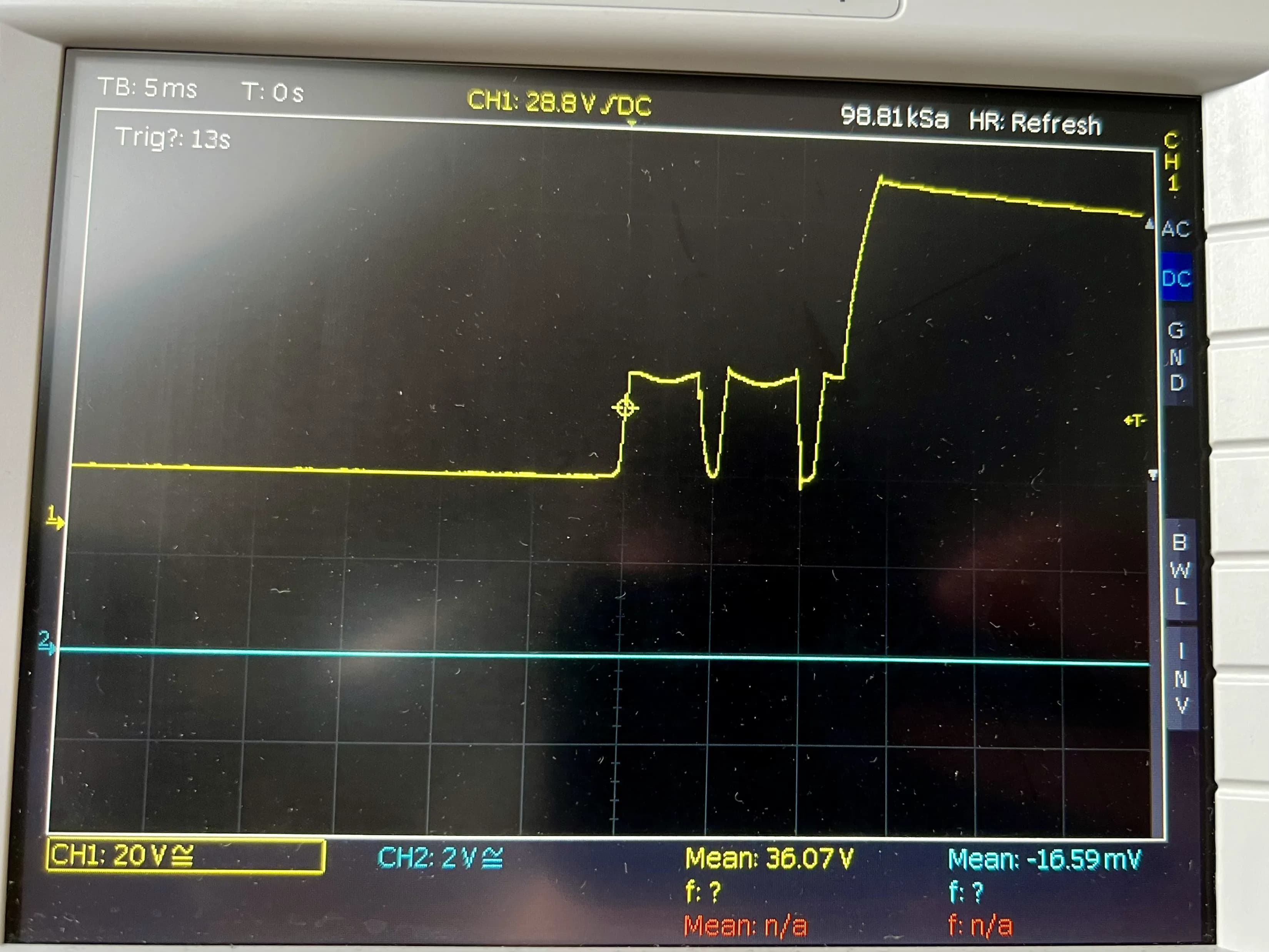
What followed was a frustrating month of debugging. Together with the Boreas team, countless tests were run. Yet the driver never behaved stably. It could not reach the specified voltage peaks, and when it tried, the waveform was always clipped. Despite multiple design reviews, one confirming the circuit was fine, another insisting it was wrong, the problem persisted.
Conclusion
In the end, the BOS1211 never worked reliably. After more than a month of back and forth, patience ran out. The prototype was shelved, and a commercial piezo jet was adopted to keep the project moving forward. These drivers cost four figures and up, but at the time, there was no other choice.
This story remains unfinished. The prototype is still a work in progress, and there is always the option to come back later and redesign a cheaper, fully custom piezo driver.