Initial actuator electronics test
This post details the process of designing a solder paste jet from scratch, focusing on the initial actuator electronics test.
For testing the paste jet option, a piezo actuator was selected from the TDK PowerHap range. The 2626H023V120 model was chosen for its 230μm stroke capability. This actuator requires up to 120V for full motion range and has a loading charge of 0.8mC, measuring 4.4μF at 1kHz 1Vrms.
The actuator can expand at several tens of G, which is beneficial for jetting thixotropic solder paste. The applied shear force changes the viscosity, facilitating paste flow.
For initial tests, an NCH6100HV nixie clock power supply was sourced from nixieclock.org. Its output voltage is adjustable between 85V and 235V, providing up to 95mA at the lowest output voltage setting. The idle voltage was preset to 120V before connecting any load.
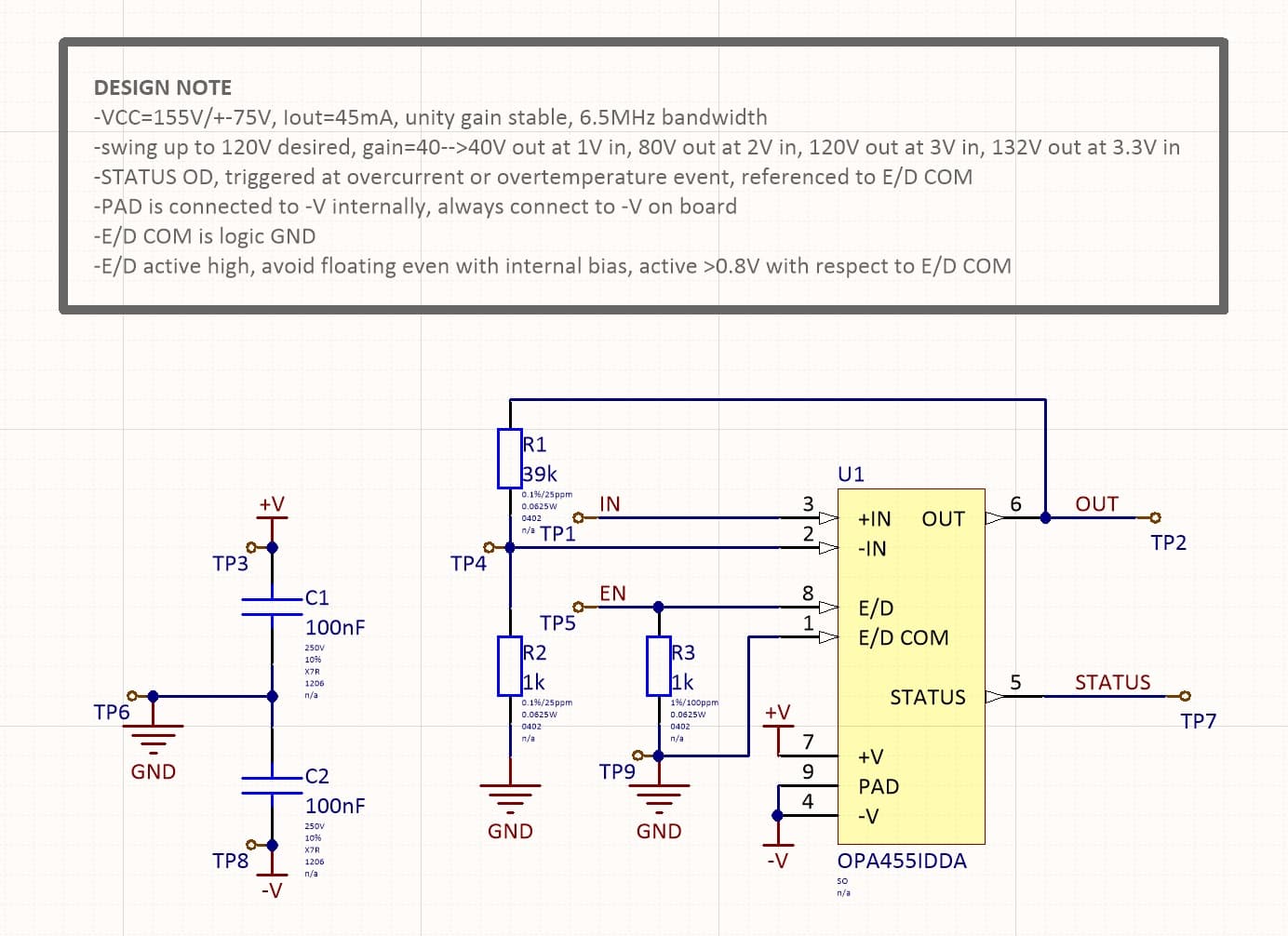
To drive the capacitive load, a compact high-power, high-voltage capable opamp circuit with a gain of 40 was designed. This configuration provides 120V at 3V logic input from the DAC. The schematic is shown below:
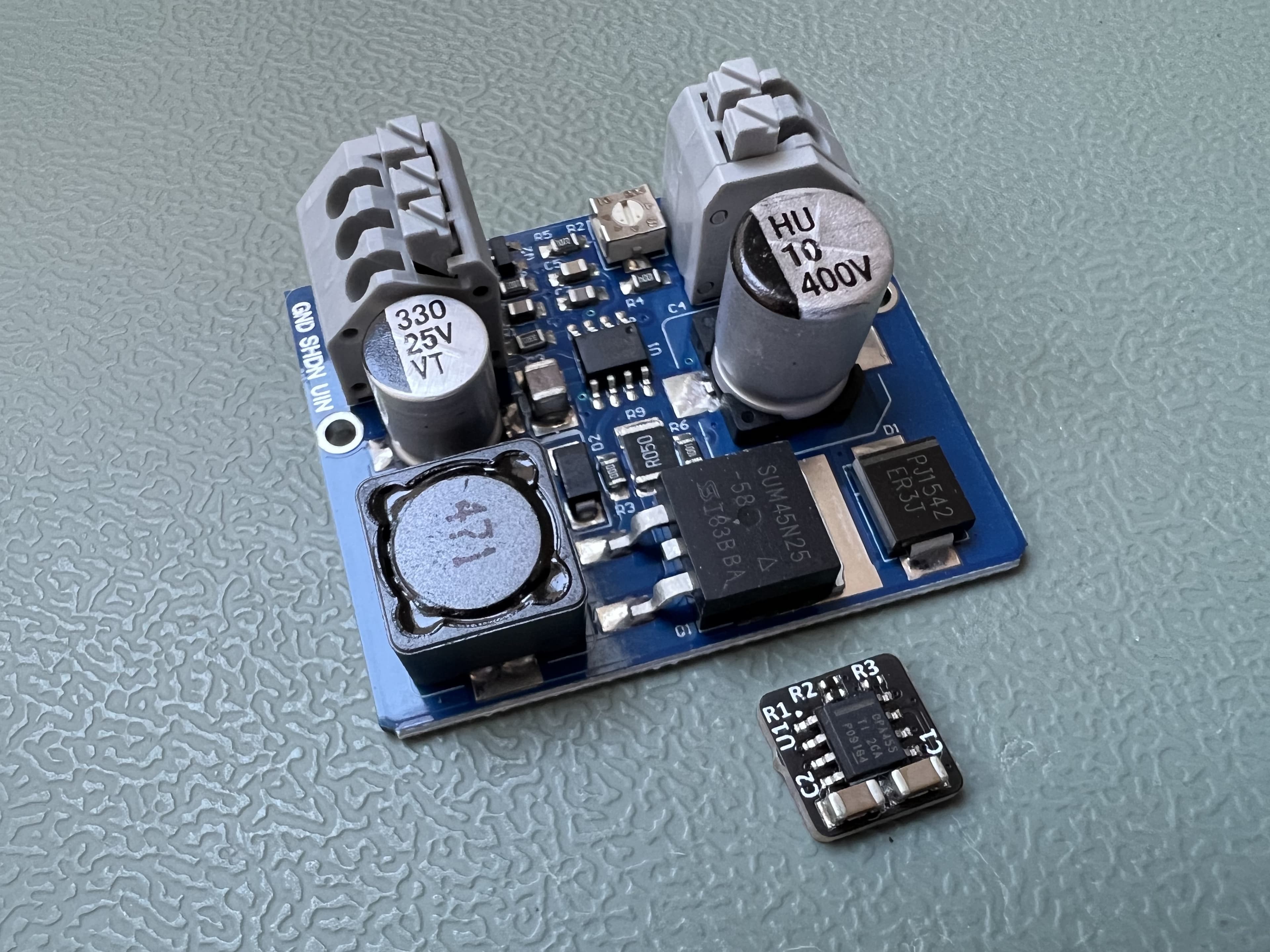
The board was designed with minimal dimensions and test points instead of connectors to simplify evaluation and expedite testing. The electronics setup is depicted here:
After assembly, a waveform generator was used to produce a rectangular pulse of 3V. Output waveforms on the load were measured at different input voltages: 3V, 2V, and 1V. The results are shown in the following images:

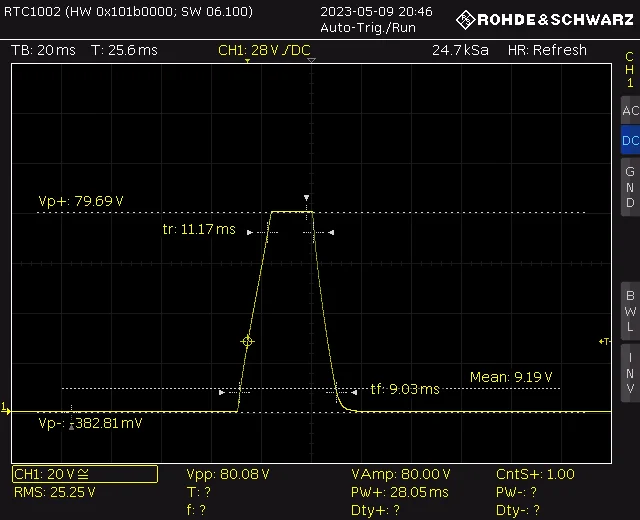
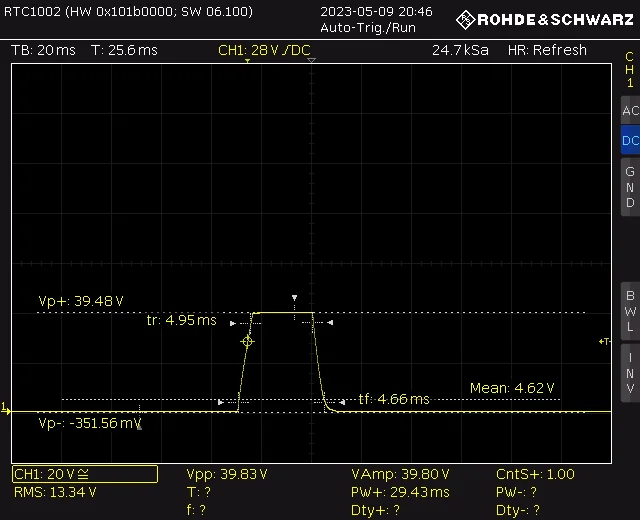
The tests revealed that the waveform slope is a limiting factor. The rise time from 0% to 100% is approximately 20ms. To achieve full range of motion (120V and 230μm stroke), a pulse of approximately 30ms is required. At lower outputs, the duty cycle can be decreased and pulse frequency increased. However, at full range of motion, the highest achievable frequency is 8Hz. Beyond this frequency, the circuit fails to register pulses.
Further investigation into this limitation was not pursued, as it became evident that a custom drive circuit would be necessary. This setup primarily served to validate the operational theory. The actuator movement is demonstrated in the following gif:

The next phase of this project will involve developing a custom drive circuit to optimize the solder paste jet's performance.